Nobody Is Driving These Semis, and the Reason Lives on Smallman Street

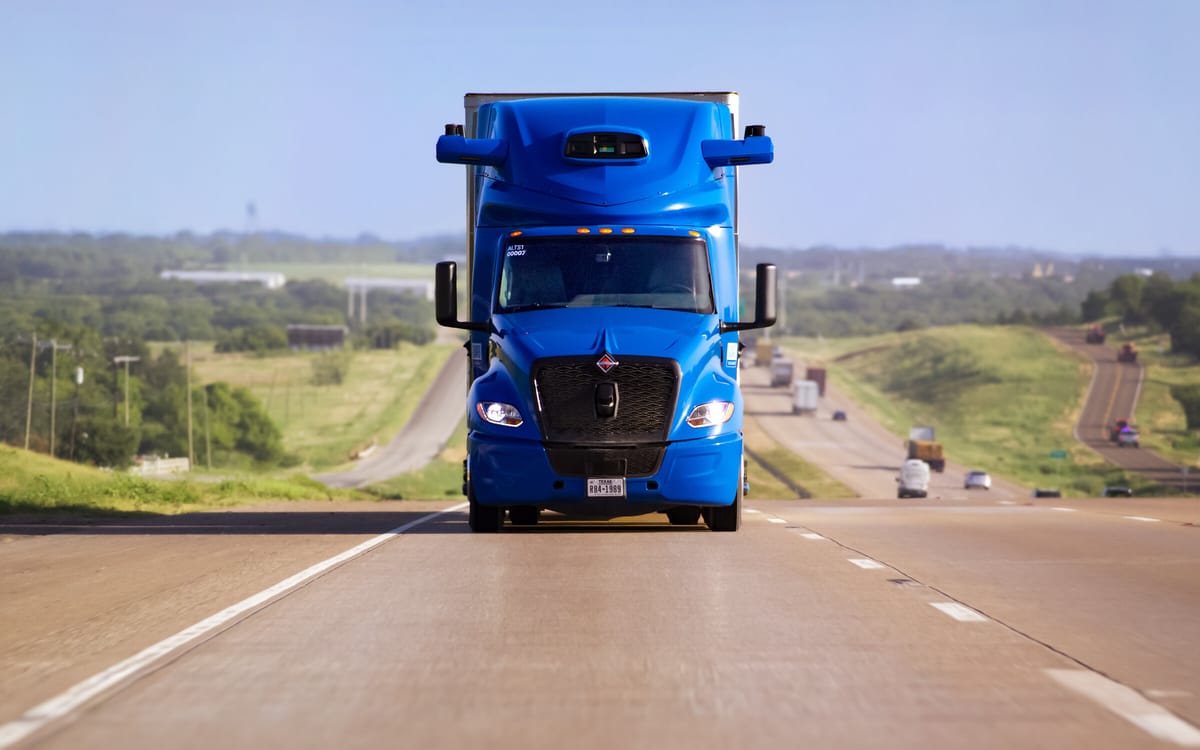
Aurora Innovation, headquartered in the Strip District, launched a new driverless semi on July 22, signed a new freight customer on July 28, and told investors on July 29 that more than 200 trucks will be hauling freight with nobody aboard by New Year's Eve.
A few years ago you could not drive through Lawrenceville or the Strip District without seeing them: white cars crowned with spinning sensors, creeping through intersections while a safety driver hovered over the wheel. Then, one by one, the test cars vanished from Pittsburgh streets, and it was fair to wonder whether the region's self-driving moment had quietly ended.
It did not end. It moved to the Texas interstates, and it gained about 78,000 pounds.
The company behind that move is Aurora Innovation, and its corporate headquarters sits at 1654 Smallman Street, across from the Strip District Terminal. Over eight days in late July, Aurora rolled out an entirely new driverless truck, signed a new freight customer, and told investors it expects to end the year with more than 200 semis on the road with no one behind the wheel.
The company that stayed
Aurora was founded in 2017 by three of the biggest names in the field. Chris Urmson led the Carnegie Mellon team that won the federal government's DARPA Urban Challenge in 2007, then ran Google's self-driving car program. Sterling Anderson led Tesla's Autopilot effort. Drew Bagnell, a CMU professor, helped build Uber's self-driving unit in Pittsburgh.
In January 2021 Aurora absorbed that Uber unit, the Advanced Technologies Group, along with its test track at Hazelwood Green. Later that year, as it prepared to go public, the company named Pittsburgh its sole corporate headquarters. At the time, most of its roughly 1,600 employees worked in the region, spread across the Strip District offices and sites in Lawrenceville and Hazelwood.
The engineering happens here. The trucks run in the Sun Belt, where the weather is milder, the freight lanes are dense, and state law welcomed driverless operations early. Aurora began commercial driverless hauling in May 2025 between Dallas and Houston, a run of about 240 miles, roughly the drive from Pittsburgh to Washington, D.C.
What launched in late July
On July 22 Aurora unveiled its second-generation driverless truck, built on the International LT Series and fitted with new sensors and computers the company says are designed to last one million miles. Aurora told Transport Topics the new hardware costs about half as much to build as the first generation, and that upfitter Roush Industries expects to be delivering 20 trucks per week to Aurora by the end of the year.
The second-generation fleet also removes a human that was never supposed to be there in the first place. After the 2025 launch, truck maker PACCAR asked Aurora to place an observer in the driver's seat of trucks built on its chassis. Aurora said the observer never touched the controls; the new fleet, the company told investors, operates without any partner-requested observer at all. On longer routes, a roadside assistance specialist may still ride in the back seat in case of a blowout or breakdown.
Six days after the truck launch, Aurora announced that Charger Logistics, a carrier that moves refrigerated food and pharmaceuticals across North America, will put the Aurora Driver to work between Dallas and Laredo, roughly the distance from Pittsburgh to Chicago.
Then, on July 29, Aurora reported second-quarter results and reaffirmed its plan: more than 200 driverless trucks in operation by the end of 2026, across a network that has grown to 10 Sun Belt routes. "Positioned to put hundreds of driverless trucks on the road this year," is how Urmson described the company in the results announcement.
The record so far
Through the end of June, Aurora's trucks had logged nearly 440,000 driverless miles on public roads, about 17 trips around the Earth at the equator. In its shareholder letter, the company reported zero collisions attributed to the Aurora Driver in commercial driverless operations and a 100 percent on-time delivery record.
The network has been stretching all year. In February, Aurora validated a 1,000-mile driverless run from Fort Worth to Phoenix, comparable to driving from Pittsburgh to Orlando. In April, carrier Hirschbach announced plans to deploy 500 autonomous trucks with Aurora. In May, Volvo's autonomous unit added a 200-mile Dallas to Oklahoma City route. The latest software, Aurora says, handles rain, fog, and heavy wind, conditions that kept earlier driverless systems parked.
The money
The scale of the bet shows in the financials. Aurora booked $2 million in revenue in the second quarter against a net loss of $270 million, most of it research and development spending. The company ended June with nearly $1.2 billion in cash and short-term investments after raising $215 million by selling new shares, and it projects $14 million to $16 million in revenue for all of 2026.
The plan investors are being asked to believe: exit this year at a roughly $80 million annualized revenue rate, reach a production pace of 1,000 trucks per year with Roush, and begin selling trucks to customers in 2027 under a model Aurora calls Driver as a Service, in which carriers own the trucks and pay Aurora for the software that drives them.
Pittsburgh's stake
Pittsburgh watched two of its self-driving giants stumble. Argo AI shut down in 2022. Uber sold its unit rather than finish the job. Aurora is the one that kept the headquarters on Smallman Street, kept the Hazelwood test track running, and kept hiring from the CMU pipeline that started all of this with a robot Humvee in the 1980s.
Whether the company's numbers work is a question for 2027 and beyond. What is already true is narrower and stranger: right now, somewhere between Dallas and El Paso, an 80,000-pound truck is holding its lane at highway speed with an empty driver's seat, and the software making every decision was written, in large part, in a converted warehouse across from Pittsburgh's old produce terminal.
Photo: Aurora Innovation.
Sources: Aurora Innovation second quarter 2026 results release and shareholder letter (July 29, 2026); Aurora Innovation Form 8-K, U.S. Securities and Exchange Commission (July 29, 2026); Aurora Innovation press releases, "Aurora Launches Second-Generation Driverless Trucks" (July 22, 2026) and "Charger Logistics to Deploy Second-Generation Driverless Trucks" (July 28, 2026); Transport Topics and Heavy Duty Trucking reporting on the second-generation launch; 90.5 WESA and NEXTpittsburgh reporting on Aurora's 2021 headquarters decision.